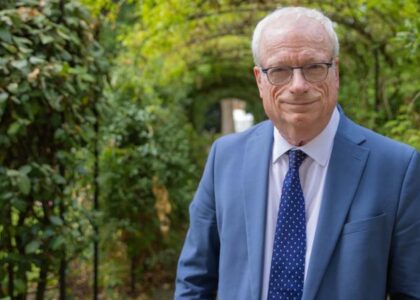
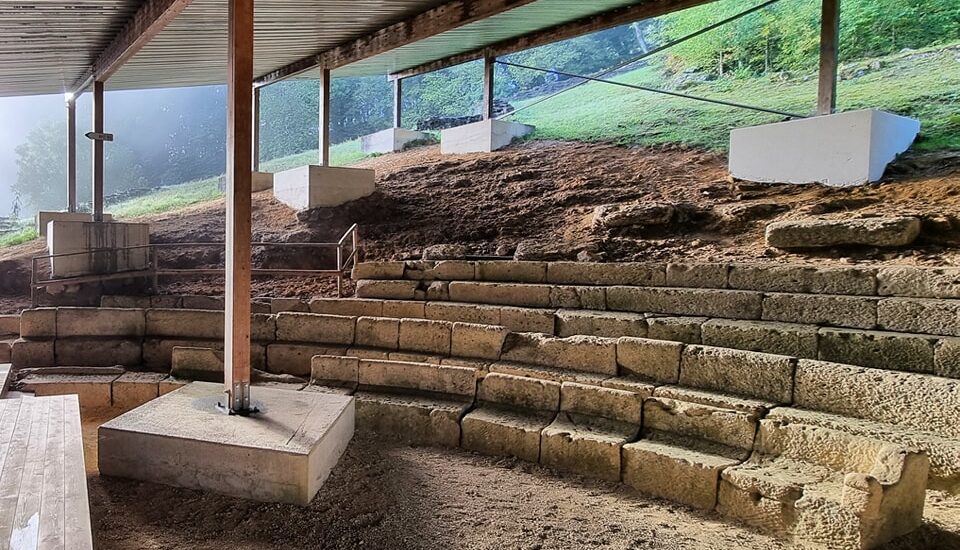
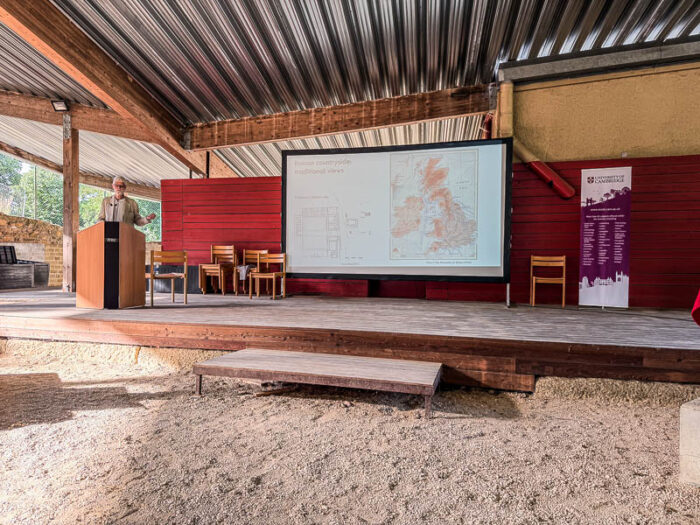
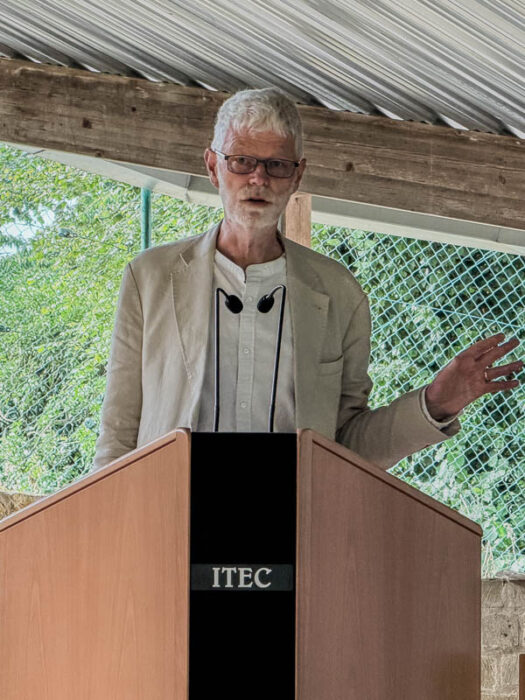
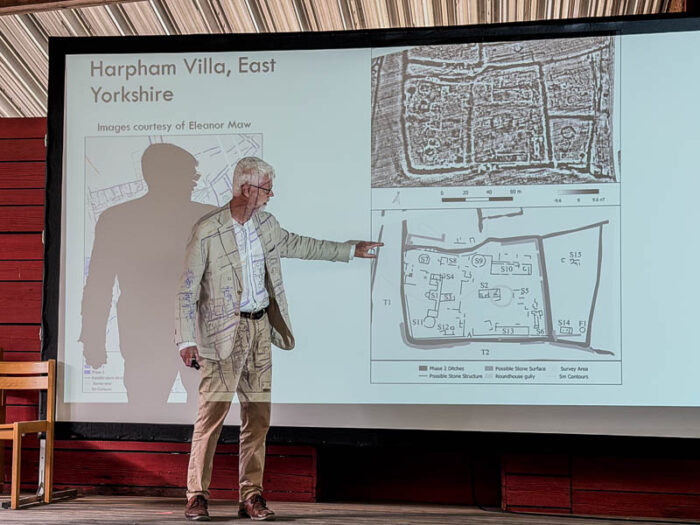
On Friday 19 June Professor Martin Millett, Emeritus Laurence Professor of Classical Archaeology in the University of Cambridge gave us a stunning talk at the most impressive Gallo-Roman Theatre at Dalheim on recent advances in geophysical survey and remote sensing techniques which have allowed archaeologists to map not only buried sites but entire landscapes without excavation. Combined with traditional research methods, they offer new understanding of Roman provincial landscapes, from urban sites to rural settlement. His talk to over 100 people explored these approaches through fieldwork in Roman Britain (present-day Yorkshire).
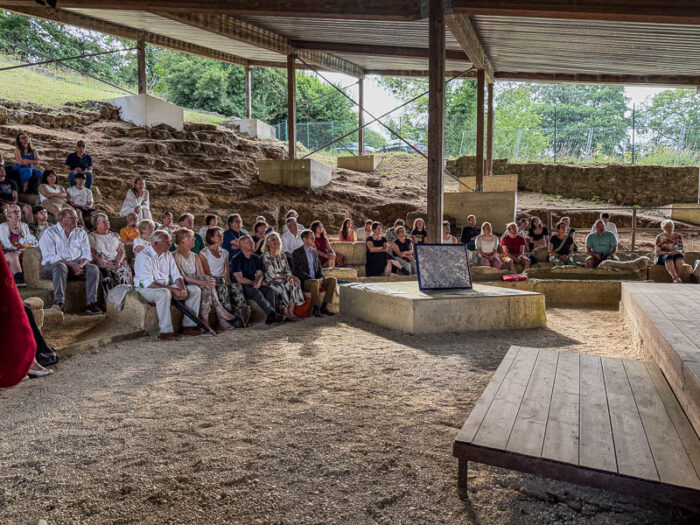
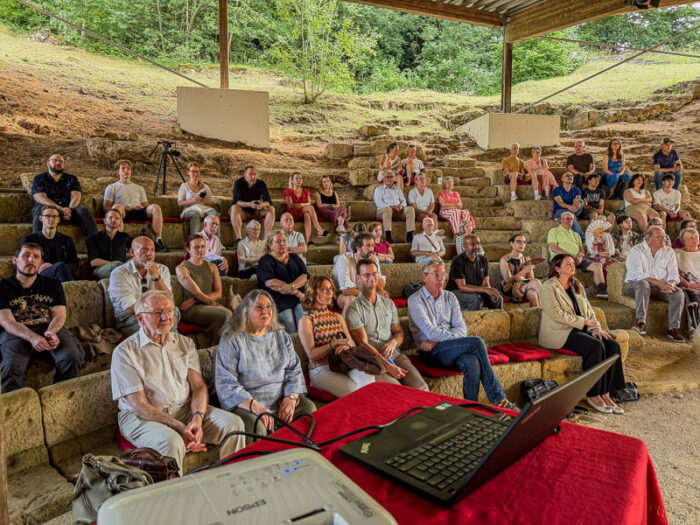
This high profile event was organised by the National Institute of Archeaological Research (INRA) together with the Cambridge Society of Luxembourg, with the support of the Ancient History Department of Uni.lu, the National Institute for Architectural Heritage (INPA), and Archeolux. Distinguished guests include H.E. Joanne Olivier, the British Ambassador to Luxembourg and the Bourgmestre of Dalheim, Romain Kill. Many thanks to David Weis, the Director of INRA for his first-class organisation.
Nena Sand, research fellow at INRA who works at the theatre began the evening by briefly explaining the background and history of the theatre in the context of Dalheim Ricciacum which is the site of a Gallo-Roman vicus, founded during the reign of the Emperor Augustus. The site was at a strategic point on the Via Agrippa, the main Roman road from the Mediterranean to the Rhine. The capacity of the theatre, which dates from the 2nd century AD , was over 3 000 persons, which gives an indication of the number of people (traders, etc.,) who came through the vicus. It would be hard to think of a better location for Professor Millett’s presentation.
After the President of the Cambridge Society welcomed the distinguished guests and the audience, Andrea Binsfeld, Professor of Ancient History at Uni.lu introduced Professor Millett. Professor Millett then gave an outstanding presentation of the various techniques such a magnetometry used by archaeologists to map settlements in a non-intrusive way over large areas. These techniques show that rural populations were considerably denser and more interconnected than previously thought. Professor Millett has focussed much of his work on the integration of indigenous populations under an imperial power, how they adapted and adopted their customs and habits. His talk was richly illustrated by detailed slides.
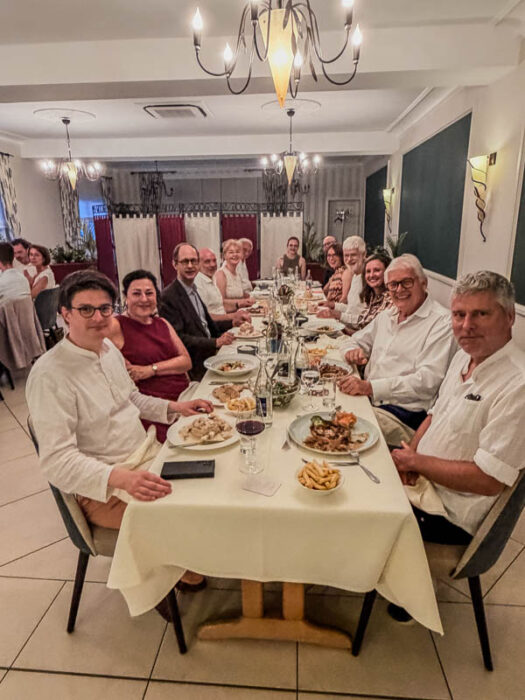
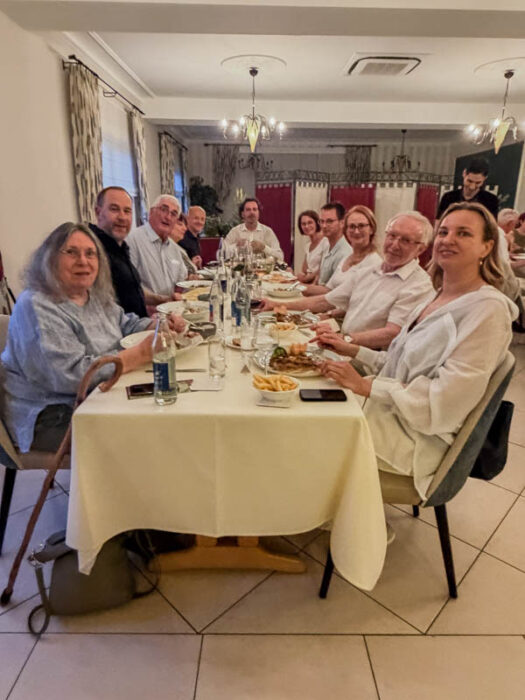
After Professor Millett’s talk and the interesting Q&A session, about a quarter of the audience moved over to Restaurant “A Schmatten” at Welfrange where Frank Thein and his staff provided us with an outstanding dinner. Very good food and excellent service, highly recommended!!
A most enjoyable and memorable evening!
John Speed, President of the Cambridge Society of Luxembourg